tmc-800x800-bk

Is Botox Safe? 15 Botox Myths and Facts Explained

雷诺德赫库尔

Metro Beauty Centers 国际护理经理

“Is botox harmful?” is one of the most common questions people ask before deciding to have Botox injections, especially after hearing claims such as Botox making the face look frozen, Botox accumulating in the body, or repeated injections eventually causing the muscles to permanently lose their ability to function.

In reality, Botox, or Botulinum Toxin, is one of the most widely used non-surgical cosmetic treatments in the world. It is used for both medical and aesthetic purposes. Botox works by temporarily blocking nerve signals that stimulate muscle contractions, which allows it to reduce wrinkles caused by repeated facial expressions and, in certain areas, help contour or reshape the face.

However, Botox injections are still medical procedures that come with precautions and the possibility of side effects. This article explores 15 common myths and facts about Botox to help you better understand its safety, potential side effects, and the important things you should know before deciding to have Botox injections.

Woman with a questioning expression illustrating Botox safety myths and facts
Myth

Botox Is a Toxic Substance That Is Harmful to the Body

Fact: Botox is made from botulinum toxin type A, which is indeed a harmful substance at high doses. However, the amounts used in medical and cosmetic treatments are purified and administered under strict dosage control. It has been approved by the U.S. Food and Drug Administration (FDA) since 1989 and has been studied for safety for decades.

Myth

Botox Will Make Your Face Look Frozen

Fact: A face that appears stiff, frozen, or unable to move naturally is often the result of excessive Botox being injected or Botox being placed in inappropriate areas. When Botox is administered by an experienced doctor who has a thorough understanding of facial anatomy, the results can look natural. You should still be able to smile, frown, and express emotions normally. The main difference is that wrinkles caused by repeated muscle movement become less noticeable. 

For people wondering if Botox is safe for face treatments, the injector’s understanding of facial anatomy and appropriate dosing plays an important role in both safety and the final appearance.

Myth

The More Units of Botox You Get, the Better the Results

Fact: Using more Botox than necessary does not automatically produce better results. In fact, excessive doses may increase the likelihood of unwanted effects such as drooping eyebrows or an uneven smile. The appropriate number of Botox units depends on factors such as the strength of the muscles being treated, the treatment area, facial anatomy, and each person’s individual goals. An experienced doctor will assess these factors and determine an appropriate dose that is neither too high nor too low.

Myth

Once You Start Botox, You Will Become Addicted and Cannot Stop

Fact: Botox is not physically or psychologically addictive. Many people choose to continue receiving Botox treatments because they are satisfied with the results and want to maintain their appearance, not because their body has become dependent on the treatment. If you stop receiving Botox injections, the muscles and skin will gradually return to their natural state as the effects of Botox wear off. There are no withdrawal symptoms associated with stopping Botox treatment.

Woman pinching her forehead skin, illustrating the myth that wrinkles worsen after stopping Botox
Myth

Your Wrinkles Will Become Worse Than Before If You Stop Botox

Fact: Once you stop injections, your muscles return to moving normally, and wrinkles gradually return to the level they were at before treatment. There is no sagging or worsening beyond your original state. This misconception usually comes from comparing your face while the Botox is still active to your face once the effect has worn off.

Myth

Botox Can Only Be Used on the Face

Fact: Beyond reducing wrinkles on the forehead, between the brows, and at the outer corners of the eyes, Botox is also approved to treat chronic migraine, excessive sweating (underarms and palms), and abnormal muscle spasms or contractions such as cervical dystonia. It is also used off-label to slim the jawline by treating the masseter muscle and to reduce platysma bands in the neck.

Myth

You Need Several Days of Downtime After Botox

Fact: A Botox session takes only 10 to 20 minutes, with no wound or downtime required. Most people return to their daily activities right away. There may be slight redness or swelling at the injection site, which fades within a few hours, making it a treatment that suits people with busy schedules or travelers visiting Bangkok.

Myth

Botox Injections Are Very Painful

Fact: The sensation during injection is usually just a light prick from a very fine needle. Reputable skin clinics often apply a topical numbing gel or a cold compress beforehand to minimize any discomfort. Most people say it hurts far less than they expected.

Myth

Younger People Shouldn't Get Botox, You Should Wait Until You Have More Wrinkles

Fact: There is now an approach known as “Baby Botox,” which involves using small doses starting at a younger age to slow the formation of static wrinkles caused by repeated movement, as a preventive option. That said, you should consult a doctor to assess whether it suits you individually. There is no fixed minimum age, but it is generally recommended for those who have reached legal adulthood.

Woman touching her cheek, illustrating a discussion of Baby Botox and preventive wrinkle care
Myth

Botox Causes Cancer

Fact: To date, there is no scientific evidence linking Botox injections to cancer. Decades of research and real-world usage data have found no such connection.

Myth

You See Results Immediately, Starting on Day One

Fact: Results generally become noticeable within 3 to 7 days after injection, with full effect visible around 2 weeks. The results last approximately 3 to 6 months, after which the effect naturally fades, so repeat injections are needed to maintain continuous results.

Myth

Results Are the Same No Matter Where You Go, the Doctor Doesn't Matter

Fact: The most important factor for safety and results is the skill and expertise of the injector, not the substance alone. Consulting a doctor who specializes in Botox and understands facial anatomy helps reduce the risk of side effects and achieve natural-looking results. Choosing to be injected by someone without a medical license significantly increases the risk. 

Patient receiving Botox injections for non-surgical facial rejuvenation
Myth

Every Botox Brand Is Equally Safe

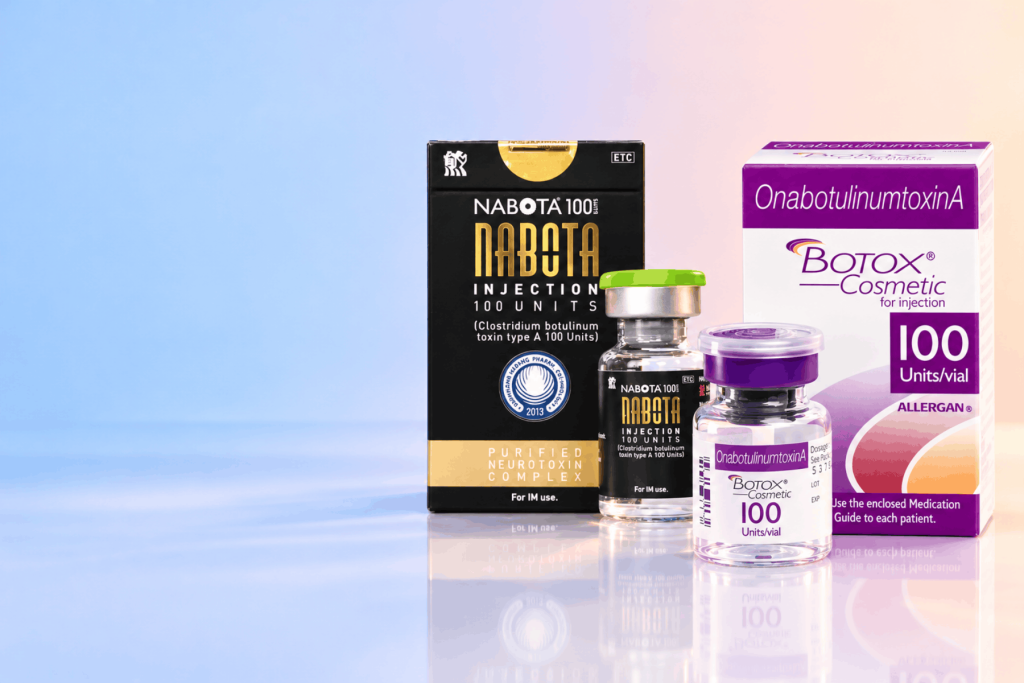
Fact: The safety of Botox depends on whether the product meets certified standards. You should choose a brand approved by the FDA, such as Allergan from the United States, or Hugel and Nabota from South Korea. Products of unclear origin or without certification may have inconsistent concentrations and increase the risk of unexpected side effects.

Myth

Cheaper and More Expensive Botox Brands Give Exactly the Same Results

Fact: While every certified brand is safe and works through a similar mechanism, the difference lies in how long the results last, which relates to price. Brands such as Botox Allergan tend to last longer, while Hugel and Nabota are more accessible in price but last slightly shorter. A good clinic should charge based on the actual number of units used rather than a flat rate by facial area, so clients know exactly what they are paying for. 

Myth

Anyone Can Get Botox, There Are No Contraindications

Fact: While Botox is safe for most people, certain groups should exercise caution, including those who are pregnant or breastfeeding, those with certain neuromuscular conditions (such as Myasthenia Gravis), or those allergic to any of the product’s ingredients. Before deciding to proceed, you should give your doctor a detailed account of your health history and any medications you are taking, so they can assess your individual suitability.

Conclusion: Is Botox Dangerous?

So, is it safe to get Botox? The answer is that Botox is safe when administered by an experienced doctor, using products that meet certified standards, at a clinic that holds a valid legal license. Most of the risk behind unsatisfying results comes from choosing a substandard provider, not from the Botox substance itself. Understanding these facts can help you decide with more confidence, whether this is your first treatment or an ongoing one to maintain results.

If you are considering 曼谷的肉毒杆菌素, consulting an experienced doctor to assess your muscle condition and plan a treatment tailored to your face is the most important step. Consult the doctors at The Metro Clinic to get advice suited to your needs and safety.

Botox Allergan vs Nabota: Differences, Injections & Price in Bangkok

Botox Allergan vs Nabota: Differences, Injections & Price in Bangkok

It combines two different materials — hyaluronic acid (HA) and calcium hydroxyapatite (CaHA) — in a single injectable treatment.

HArmonyCa: The Dual-Action Approach to Facial Rejuvenation

HArmonyCa: The Dual-Action Approach to Facial Rejuvenation

Looking for HArmonyCa in Bangkok? Learn what this hybrid dermal filler is, what to expect during the injection procedure, and……

15 Top Clinics for Ultherapy Prime in Bangkok, Thailand

15 Top Clinics for Ultherapy Prime in Bangkok, Thailand

Compare 15 clinics offering the newest Ulthera Prime device, with addresses, phone numbers and tips for booking safely.